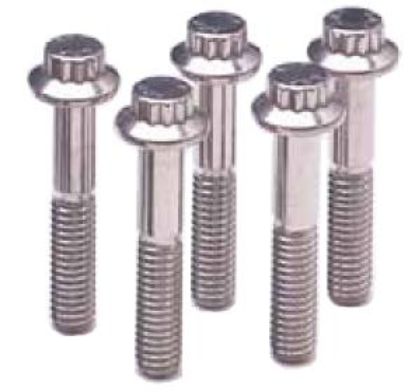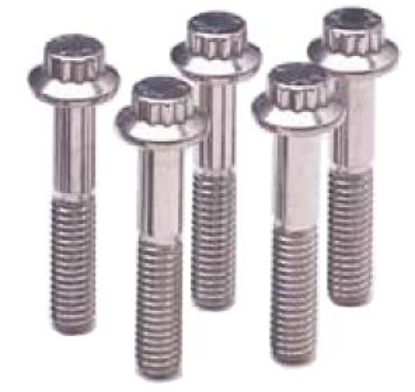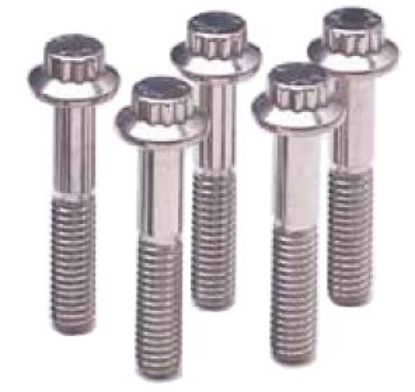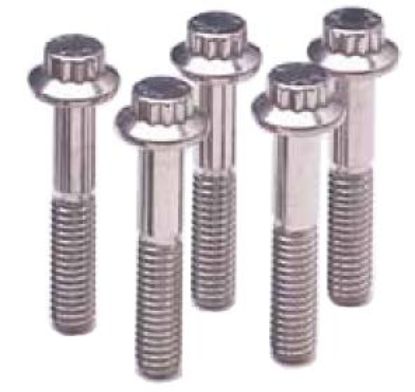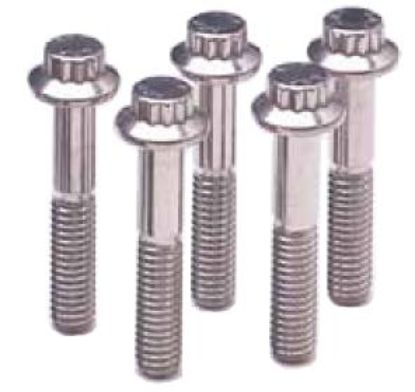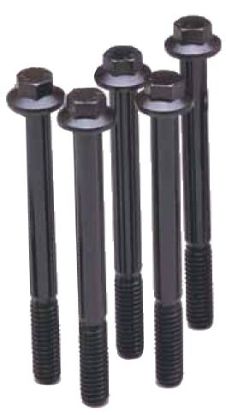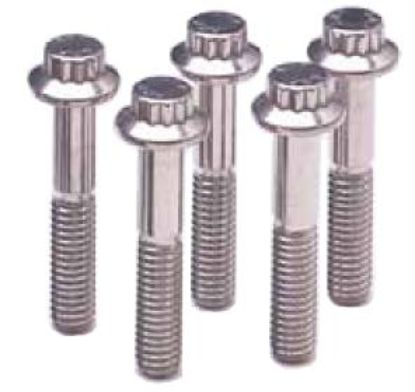

ARP M10 x 1.50 x 40 12pt Black Oxide Bolts (5/pkg)
arp672-1005
ARP M10 x 1.50 x 40 12pt Black Oxide Bolts (5/pkg)
29,87 € excl. VAT
Which bolt can handle the load when a suspension bracket, an engine part or a universal bracket needs to stay securely in place? This category brings together bolts for chassis, engine and general assembly with different threads, lengths, head types and materials, so you can match the fastener to the job in your project.
The category is divided into three: chassis bolts for e.g. suspension and brackets, engine bolts for joints on the engine and universal bolts for jobs where you choose the size and length yourself. Brands in the category include ARP, Skyjacker, Moog, Athena and Superlift. At ARP you will find, for example, hex bolts in black oxide steel and 12-point bolts in stainless steel.
Start with the thread. Designations such as 3/8-16 and 1/4-28 indicate the diameter and number of threads per inch, so 1/4-20 and 1/4-28 have the same diameter but do not fit the same threaded hole. Then choose based on:
Tighten to the manufacturer's torque and lubricant instructions, as lubrication on the threads and under the head affects the preload you achieve at a given torque. Some bolts are intended for single use, so check the instructions before reusing them. Use washers under the head where the manufacturer specifies it, and it is a good idea to recheck chassis bolts after the first few kilometres.
Both have a diameter of 1/4 inch, but 1/4-20 has 20 threads per inch, while 1/4-28 has 28 and therefore a finer thread. They do not fit each other's threaded holes, so always check the thread pitch.
A 12-point head can be practical where there is limited space around the bolt, because the tool typically takes up less room. The choice depends on the joint, the available space and the tools you have at hand.
It depends on the bolt. Some are intended for single use, while others can be reused if they are undamaged and still meet the manufacturer's specifications. Always follow the instructions for the specific part number.
A stud is screwed into the component, and the part is clamped with a nut. This can spare the thread in the component during repeated removal, but the choice depends on the joint and the manufacturer's instructions.