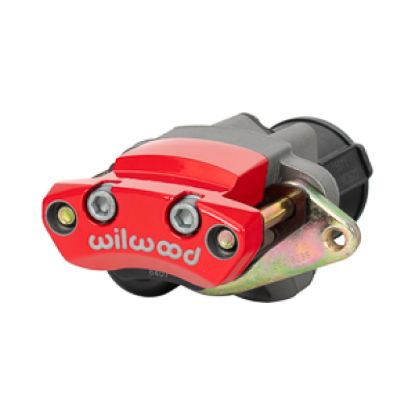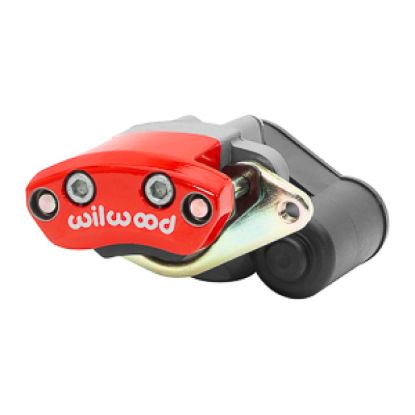

Wilwood Powerlite Caliper 1.00in Pistons .79/.86 Rotor - Anodized
wil120-13517
Wilwood Powerlite Caliper 1.00in Pistons .79/.86 Rotor - Anodized
258,93 € excl. VAT
Do you want your car to brake more consistently on the road, or does your project need brakes that can handle the heat of a track day? Here you will find parts for the entire brake system – from disc and drum brakes to master cylinders, brake boosters, handbrakes and valves – for daily driving, restoration and motorsport.
The brake system converts the pressure from the pedal into friction at the wheels. The master cylinder and brake booster create and amplify the hydraulic pressure, while disc brakes or drum brakes convert it into braking force. Valves control the pressure: a proportioning valve can adjust the balance between the front and rear axle, and a residual pressure valve can maintain a low pressure in the system, typically with drum brakes. On top of that come handbrakes, vacuum pumps for engines with too little vacuum for the booster, and exhaust brakes for diesel engines.
Start with how the car is used. For daily driving, it is about smooth braking performance and low noise. For hard driving, heat tolerance is important, because overheating can cause braking performance to fade. Consider, among other things:
In this category you will find brands such as Wilwood, EBC, PowerStop, R1 Concepts and Brembo, as well as complete kits, e.g. Baer Brakes' rear brake kits for classic GM rear axles. If you change calipers, check whether the master cylinder's capacity is still suitable, so that pedal travel and pressure are not changed undesirably.
Brakes are safety-critical, so installation should be carried out by someone with experience, and the system must be bled afterwards. Use the correct tightening torques and the right hardware – for two-piece rotors, for example, separate bolts and nuts are available. Brake fluid absorbs moisture over time and can boil under hard use, which can result in a soft or long pedal. That is something different from overheated pads and rotors losing friction. So change the fluid regularly and check the wear on pads and rotors.
Not necessarily. Drilled and slotted rotors can help carry gas and heat away, but whether they offer an advantage depends on the car, the pads and the use. Solid rotors can be just as suitable.
It depends on the product and the car. Check the approval, e.g. E-mark or R90 for pads and rotors, for the specific part number, and find out whether changes to the brake system must be declared at the vehicle inspection.
It can be caused by air in the system or by brake fluid that has absorbed moisture and boils at high temperatures. Bleeding and fresh fluid of the right type often solve the problem.
It depends on the change. Calipers with different piston sizes can require a different fluid volume, so the pedal travel changes. Check whether the existing master cylinder suits the new system.