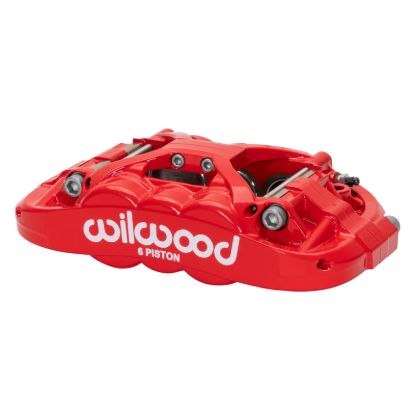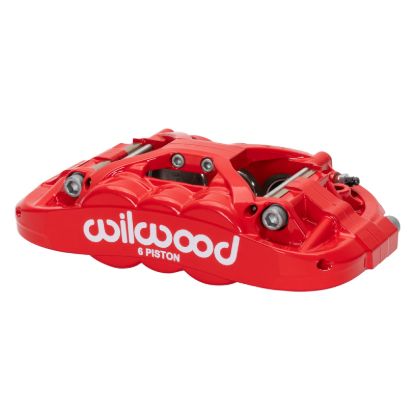

Wilwood XRS6R 1.75/1.25/1.25 1.25 Rotor L/H Caliper - Ano
wil120-17220
Wilwood XRS6R 1.75/1.25/1.25 1.25 Rotor L/H Caliper - Ano
723,08 € excl. VAT
Want your car to brake more consistently on country roads, at a track day or in a heavy build? Here you will find disc brake parts: brake discs, brake pads, brake calipers and big brake kits, plus brackets, disc bells and rebuild kits. This category is for you if you want to maintain, upgrade or completely rebuild your brakes.
The caliper presses the brake pads against the brake disc, and the friction converts kinetic energy into heat. That is why braking performance depends as much on how the parts handle heat as on the bite itself. You can replace individual parts such as brake discs, brake pads and brake calipers, or upgrade the whole axle with a kit. Brands in the category include Brembo, EBC, Wilwood, PowerStop and R1 Concepts.
Start with your car's model, year and specification. The same model can have different brakes depending on the brake package; for example, there are discs for the Corvette C6 specifically in the version with the Z06 package. Then consider these factors:
A big brake kit with larger discs and multi-piston calipers can provide more heat capacity and a more consistent pedal feel during repeated braking. However, size alone does not determine the result: the inner dimensions of the wheel, the unsprung weight, the brake balance between front and rear axle and the master cylinder capacity must all match. Also check whether the upgrade requires different brackets or new brake hoses.
New discs and pads typically need to be bedded in according to the manufacturer's instructions so that an even contact surface is formed. Regularly check pad thickness, the disc's minimum thickness and the age of the brake fluid. Overheating can cause braking performance to drop, while a soft or long pedal can be caused by boiling or moisture-laden brake fluid. These are two different problems with different solutions. Leaking or sticking pistons can often be fixed with a brake caliper rebuild kit.
It depends on the specific product and on the car. Check the approval for the specific part number, e.g. E-mark or R90 for discs and pads, before fitting the parts to a car that will be driven on the road.
It often makes sense, because new pads on worn or uneven discs can result in a poor contact surface and vibrations. Always replace in pairs on the same axle, and measure disc thickness against the minimum specification.
A soft or long pedal is typically caused by boiling brake fluid or air in the system. This is different from heat fade, where the pads lose friction. Check the fluid's boiling point and age, and bleed the brakes.
It depends on the disc size and the shape of the caliper. Check the inner diameter of the wheel and the clearance at the spokes, ideally with a template from the manufacturer, before you order.