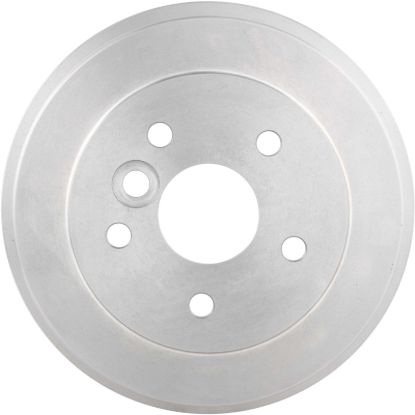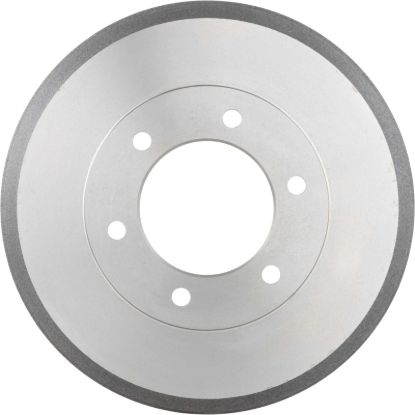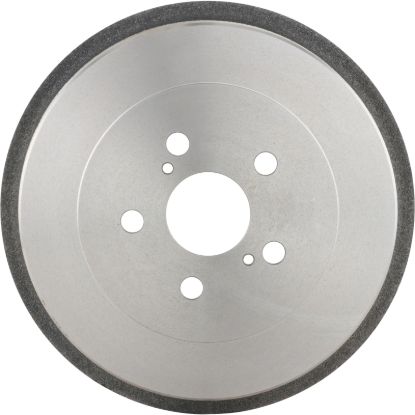

Brembo 02-05 Toyota Camry Rear Premium OE Equivalent Brake Drum
bre14.C278.10
Brembo 02-05 Toyota Camry Rear Premium OE Equivalent Brake Drum
71,42 € excl. VAT
Does your car pull to one side when braking, or is there a metallic scraping from the rear wheels? That can be a sign of worn shoes or a leaking wheel cylinder. In this category we bring together the parts for drum brakes – drums, brake shoes, wheel cylinders and hardware – for you who want to overhaul your brakes with individual parts or a complete kit.
When you press the pedal, the wheel cylinder pushes the brake shoes out against the inside of the rotating drum. Springs, hold-down pins and the adjuster mechanism return the shoes and maintain the correct clearance. Many cars have drums at the rear and discs at the front, and on some models the handbrake also works via the drum. Parts for the front axle are found under disc brakes, and the rest of the braking system under brake systems.
Fitment for the specific car and axle is crucial. Check in particular:
A complete kit combines several parts in one package, e.g. PowerStop's Autospecialty Drum Kits for the rear axle of models including the Toyota Corolla, Toyota Camry and Chevrolet Silverado 1500 2WD. If the drum is within the wear limit, new brake shoes alone may be enough, e.g. from BikeMaster. Other brands in the category include DFC, OMIX and Brembo OE.
Replace shoes and drums in pairs on the same axle so the braking force is distributed evenly, and ideally replace the springs at the same time, as they can lose tension with age and heat. After installation, the shoes must be adjusted. A long pedal can be caused by misadjusted shoes, while a soft pedal can be caused by air in the system or boiling brake fluid. Prolonged overheating can also cause braking performance to drop. Whether a part is approved for road use depends on the product and the car, so check e.g. E-mark or R90 for the specific part number.
When the drum is worn beyond the wear limit typically stamped into it, or has deep grooves, cracks or has become oval. If it is within specification, new shoes can often be fitted on their own.
Not necessarily, but check it for leaks. Brake fluid under the dust boots indicates a leaking cylinder, and the fluid can contaminate the shoes and reduce braking performance.
It can be caused by uneven adjustment, a seized wheel cylinder, contaminated shoes or uneven drum wear. That is why shoes and drums should be replaced in pairs and adjusted equally on both sides.
It depends on the specific product and your car. Check for the individual part number whether the part has the necessary approval, e.g. E-mark or R90, and that it matches your car's specifications.