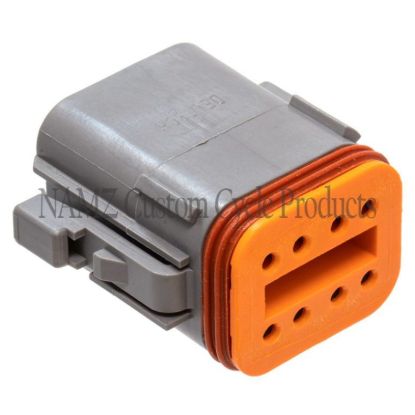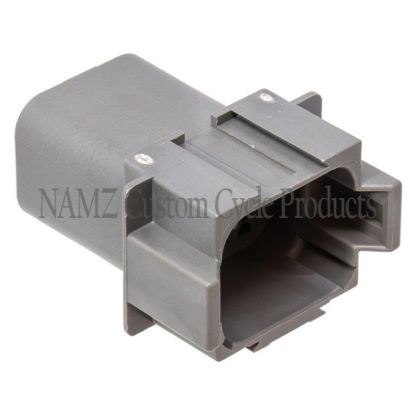

NAMZ Delphi-Packard Weatherpack 1-Position Male Wire Connector w/Seals
namNDP-38060
NAMZ Delphi-Packard Weatherpack 1-Position Male Wire Connector w/Seals
9,12 € excl. VAT
Is a loose connection causing failures, or does new equipment need power and signal in a safe way? In this category we bring together connectors, wiring harnesses, relays, cables and wire loom for you if you are installing an ECU, switches or lights, or want to make the existing electrical system in your project more reliable.
The electrical system consists of several parts that need to work together. Wiring harnesses bundle the wires for e.g. an ECU or a switch panel, while electrical connectors let you remove components without cutting the wires. Relays let a small control current from a switch switch a larger current to e.g. a starter or lights, so the switch is not overloaded. In the range you will find, for example, adapter and extension harnesses from Haltech, mating connectors for a PDM – an electronic power distribution module – from Rywire, pigtails – short pieces of wire with a connector – from Fleece Performance and relays from Arrowhead. NAMZ is also among the brands in the category.
The right choice depends on more factors than just the size:
Under cables and wires you can choose wire by cross-section and insulation.
Route wires away from hot parts such as the exhaust manifold and turbo, and secure them so they do not chafe against sharp edges. Wire loom can protect against wear and heat, depending on the material. A plug-and-play harness can simplify installation, but always check that it fits your specific ECU and version. When troubleshooting, corroded connectors, loose ground connections and damaged insulation are typical causes of failures. Changes to the electrical system, e.g. extra lights, can matter at the vehicle inspection, so check the requirements for the specific car and the specific part number.
A relay is typically relevant when the load draws more current than the switch and its wires are designed for, e.g. with extra lights. The switch then only controls the relay, while the current flows through a shorter, heavier wire with a fuse.
It depends on the product. An adapter harness typically connects a new ECU to the existing wiring harness without cutting into it. Check the product description to see which ECU and which connector it is designed for.
The cross-section depends on the current, the length of the wire and the temperature where it is located. Use a current rating table, and choose the fuse according to the wire, so the fuse blows before the wire gets too hot.
Failures are often caused by corrosion in connectors, loose ground connections, wires worn through by vibration or sharp edges, or heat-damaged insulation. Go through connectors and wire routing before you replace components.