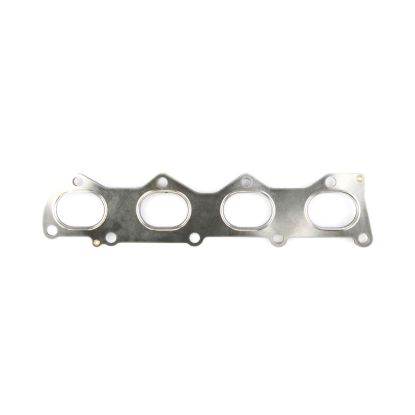
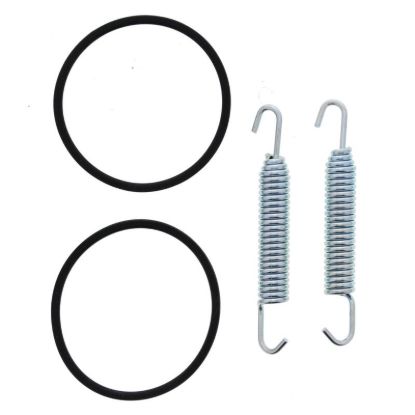
Vertex Pistons 01-22 YZ 2/16-22 YZ 250 X Exhaust Gasket Kit
vep823139
Vertex Pistons 01-22 YZ 2/16-22 YZ 250 X Exhaust Gasket Kit
26,03 € excl. VAT
Is there a ticking noise from the engine bay on cold start, or a smell of exhaust fumes after a project with new headers? A leaking gasket between the exhaust manifold and cylinder head, at the turbo or in a flange joint can be the cause. In this category we bring together exhaust gaskets and seals for both car and motorcycle engines.
Exhaust gaskets have to seal between metal parts that expand and contract with large temperature changes. The category is divided by location: exhaust manifold gaskets sit between the cylinder head and the manifold or headers, flange gaskets seal joints further down the system, and turbo gaskets sit at the turbo flanges. Brands here include Fel-Pro, Cometic Gasket, Vertex Pistons, Magnaflow and JBA.
Start by choosing based on engine and location, then look at:
A new gasket only seals if the flanges are flat and clean. Remove old residue without scratching the surface, check the flanges for warping, and tighten the bolts evenly and in stages to the manufacturer's torque spec. Some joints need re-torquing after the first heat cycles – follow the instructions for the specific product. If the rest of the engine needs sealing too, you'll find it under engine gaskets and seals in the main category for gaskets and seals.
It is typically not recommended. Most gaskets compress and conform to the flanges on first heat-up, so a used gasket rarely seals as well again. If you replace the manifold, headers or turbo, you should as a rule replace the gaskets too.
Typical signs are a ticking noise that can be most noticeable on cold start, soot around the joint or a smell of exhaust fumes in the engine bay. A cracked manifold or loose bolts can cause the same symptoms, so check those as well.
A leaking exhaust can lead to a remark at the vehicle inspection, and exhaust fumes can get into the cabin. Whether aftermarket parts are road legal depends on the product and the car and must be checked for the specific part number.
It depends on the gasket. Many ready-made exhaust gaskets are designed to be installed dry, and extra sealant can in some cases impair the seal. Follow the manufacturer's instructions for the exact gasket you are installing.