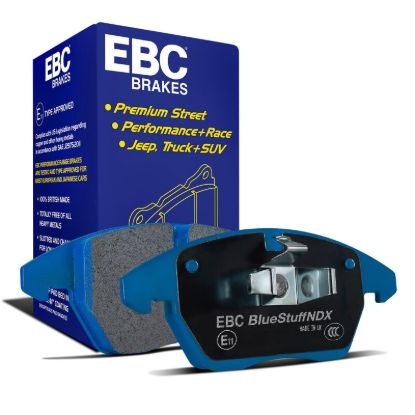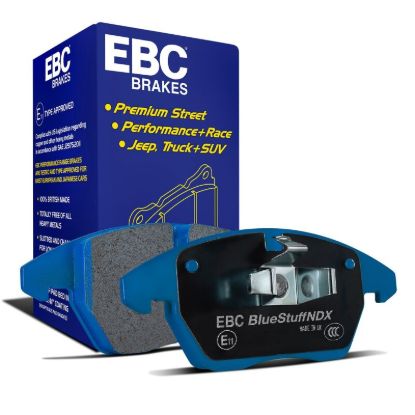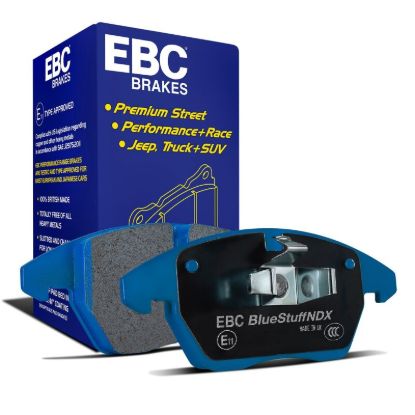
EBC 01-02 Subaru Impreza 2.0 Turbo WRX Bluestuff Rear Brake Pads
ebcDP51293NDX
EBC 01-02 Subaru Impreza 2.0 Turbo WRX Bluestuff Rear Brake Pads
199,85 € excl. VAT
Do you drive track days on a closed circuit or take part in motorsport, where the brakes work harder and hotter than on public roads? Here you will find brake pads designed for high temperatures and repeated hard braking.
Track and race brake pads typically have a compound designed for a higher temperature range than street brake pads. This can give more stable friction when the brakes get hot. Cold pads, on the other hand, can brake less effectively and be noisier. Overheating can still cause braking performance to drop if the pad operates outside its temperature range. A soft or long pedal, however, is often caused by boiling brake fluid, so the fluid should also suit the use.
The choice depends on several factors:
Examples include Hawk Performance with e.g. HT-10 and DTC-30 and EBC with e.g. Bluestuff and RP-X. We also carry pads from Project Mu, PowerStop and DBA. Check the fitment by car, front or rear axle and brake caliper. Bed in new pads according to the manufacturer's instructions. You will find all types under brake pads.
It depends on the compound. Some can be used on the road, but many need to be warm to brake optimally and can brake less effectively when cold. Road legality depends on the product and the car, and R90 approval must be checked for the specific part number.
A soft or long pedal is often caused by boiling brake fluid rather than the pads. Switch to a fluid with a higher boiling point and bleed the system. If braking performance drops while the pedal stays firm, the pads may be overheated.
Yes, typically. Bedding in lays an even layer of pad material on the disc and can give more stable friction and less vibration. Follow the manufacturer's instructions and check whether your discs suit the new compound.