
NAMZ OEM Color Primary Wire 100ft. Spool 18g - Black
namNWR-0-100
NAMZ OEM Color Primary Wire 100ft. Spool 18g - Black
$402.85 excl. VAT
Do you need wire for auxiliary lights, a new sensor or a repair of the existing wiring harness? This category contains primary wire on spools from NAMZ in several gauges and colours, so you can run new circuits properly and keep track of what each wire does.
The size is stated in gauge (AWG), where a lower number means a thicker conductor. For example, we carry 12 and 14 AWG in NAMZ GXL wire with bare copper and 18 and 20 AWG in NAMZ OEM Color wire. The right gauge depends on the current draw, the length of the wire and how it is routed – a wire that is too thin can cause voltage drop and get hot. Check the current requirement of the load and the fuse rating, and choose a slightly thicker wire for long runs. High-current loads are typically controlled via a relay, so the switch does not have to carry the full current.
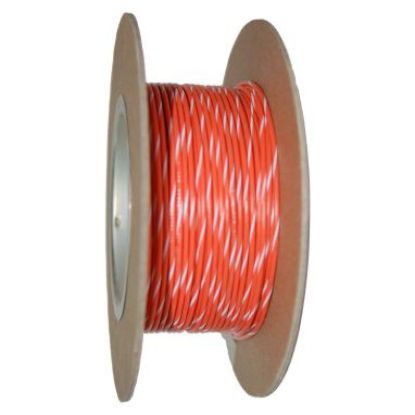
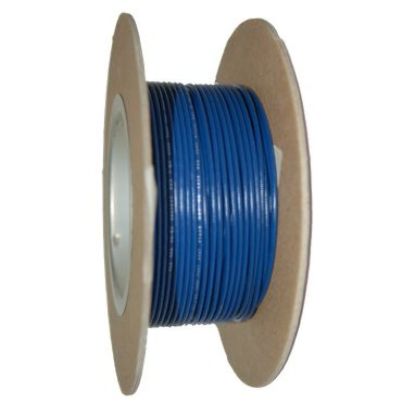
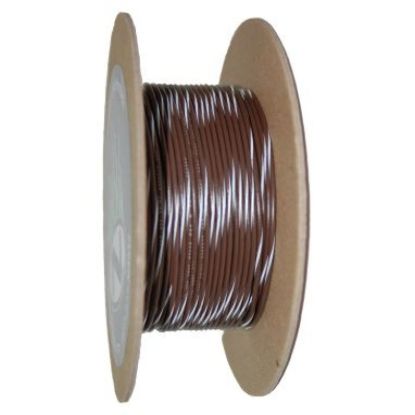
The wires are available in solid colours and with stripes, e.g. orange/white and red/yellow, so you can colour-code your circuits and make troubleshooting easier later. The spools are 25 or 100 feet, corresponding to approx. 7.6 and 30.5 metres. Terminate the wire with suitable connectors and terminals, and protect it against heat, sharp edges and chafing with wire loom and protective sleeving. If you are facing a bigger project, a ready-made wiring harness can be an alternative to running everything yourself. See also more products from NAMZ.
In this category, the NAMZ GXL wire has bare copper in 12 and 14 AWG, while the OEM Color wire is available in 18 and 20 AWG in many colours and stripe combinations. Check the insulation specifications for the specific part number if the wire will be located close to heat.
It depends on the total current draw of the lights, the wire length and the fuse. Calculate the current from the lights' wattage and the system voltage, and choose a gauge that suits both the current and the fuse. Thicker wire (lower AWG number) gives less voltage drop.
It is not recommended. Twisted joints with tape can come loose, corrode and cause a poor connection. Instead, use crimp connectors, soldering with heat shrink or suitable connectors, and provide strain relief so vibrations do not pull on the joint.