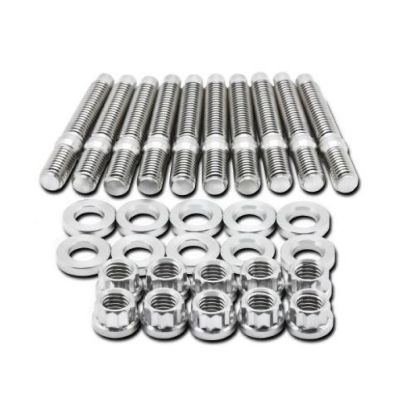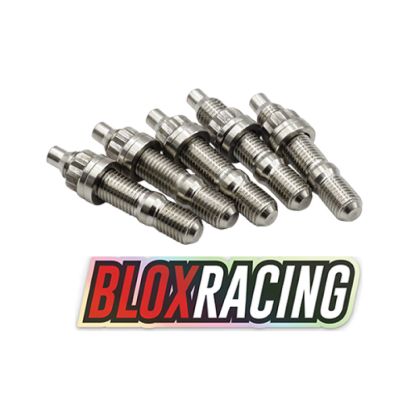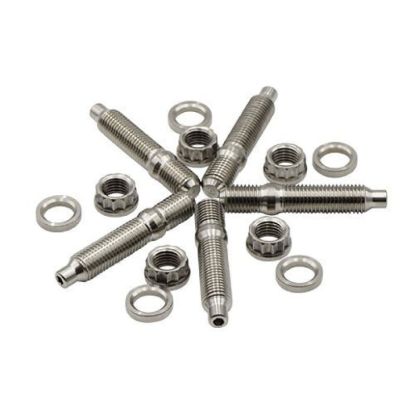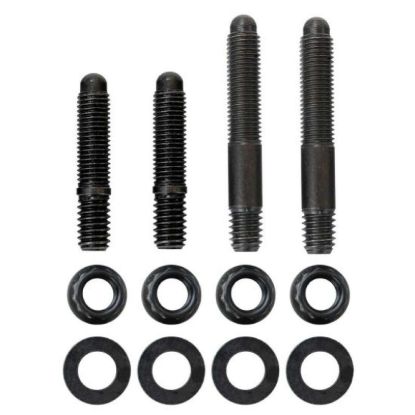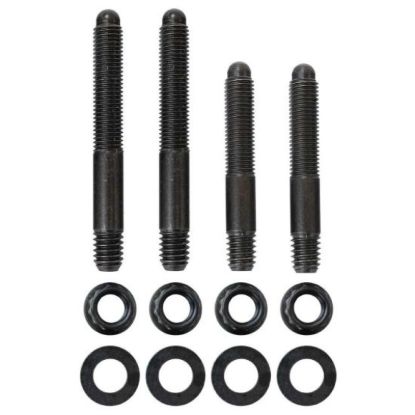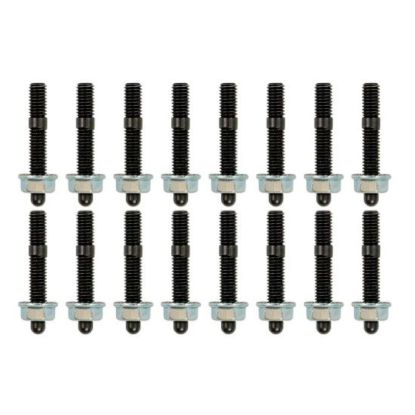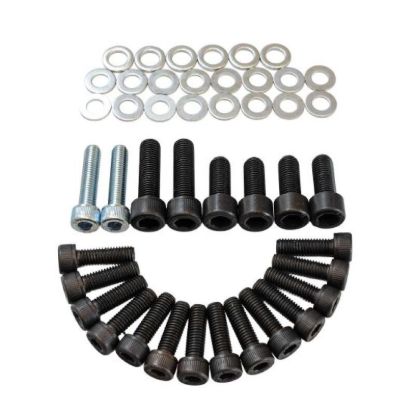


BLOX Racing BLOX Racing Manifold M8x1.25x45mm Stud Kit 10-piece
bloBXFL-00307-10
BLOX Racing BLOX Racing Manifold M8x1.25x45mm Stud Kit 10-piece
$455.14 excl. VAT
Are the old studs rusted solid, or does the manifold need to come off and go back on several times during your project? Studs are screwed into the cylinder head and stay in place, while the manifold is clamped down with nuts. Here you can choose kits for intake and exhaust manifolds in stainless steel or titanium, for both single repairs and complete replacement.
If you screw a bolt directly into the cylinder head, the thread is stressed every time the manifold is removed. With studs, the stud itself stays in place, and removal and refitting are done on the nut. This typically spares the thread in the cylinder head and makes it easier to position the gasket and manifold correctly. That is an advantage in a project where the intake, exhaust manifold or headers have to come off several times.
Check these points before you order:
In this category you will find e.g. kits from BLOX Racing and products from Moroso.
Clean the thread in the cylinder head before screwing in the stud. If the stud has a different thread length at each end, the correct end must face the cylinder head. Tighten to the car manufacturer's torque spec, and use suitable nuts and washers. On the exhaust side, the joint is exposed to large temperature changes, so re-torquing after the first heat cycles may be relevant, depending on the gasket type. Anti-seize paste can make later removal easier, but lubrication affects the relationship between torque and preload.
It depends on what you prioritise. Stainless SUS303 steel can resist corrosion well, while titanium is lighter. Always check the thread, length and the manufacturer's instructions for the specific part number.
If the thread is damaged, or the stud is bent or heavily corroded, it should be replaced. Rusted-in studs can snap during removal, so work carefully. A single piece can replace one damaged stud without replacing the whole kit.
Measure the old stud, or add up the flange thickness, gasket, washer and nut height, plus the thread engagement in the cylinder head. A stud that is too short gives too few threads engaged in the nut, while one that is too long can hit other parts.
Temperature changes make the manifold, gasket and studs expand and contract, so the preload can drop. Whether re-torquing is necessary depends on the gasket type and the car manufacturer's instructions.