
Twin Power 90-97 Big Twin 91-Up XL Clutch Spring Compressor Tool
twp487054
Twin Power 90-97 Big Twin 91-Up XL Clutch Spring Compressor Tool
$919.65 excl. VAT
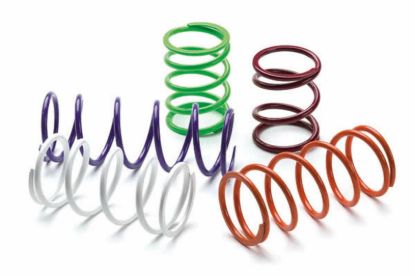
Does your clutch slip under hard acceleration, or do you want the CVT to engage at a different RPM? Clutch springs have a major impact on how firmly the plates are pressed together and how a CVT clutch shifts. This category includes spring kits for motorcycles as well as primary and secondary springs for ATVs and UTVs.
In a multi-plate clutch, the springs press the plates together. Stiffer springs can increase clamping force and reduce slipping when the engine produces more power, but typically result in a heavier pull at the clutch lever. In a CVT clutch, the primary spring typically affects the RPM at which the clutch engages, while the secondary spring affects how the ratio shifts back under load. The springs work together with weights and rollers, so also see CVT weights and rollers if you are tuning the entire CVT.
The starting point is always the model and year stated in the product name – for example, there are spring kits for Yamaha YZ125/YZ250F and Honda XR600/XR650L. Then consider:
For installation, there is for example a clutch spring compressor tool from TwinPower. Tighten the spring bolts evenly and according to the manufacturer's instructions. The category also includes brands such as Wiseco, Dynojet and Moroso.
If the clutch slips even though the plates are within the wear limit, the springs may have lost tension. Many manufacturers specify a minimum free length for the spring, so measure the springs and compare with the specification for your model.
The primary spring sits in the drive clutch and typically affects the engagement RPM. The secondary spring sits in the driven clutch and affects how the ratio responds to load. The effect of a replacement depends on the combination with weights and the rest of the setup.
It is recommended to replace the springs as a complete set so that pressure is distributed evenly across the pressure plate. If old and new springs are mixed, the clutch can engage unevenly and the plates can wear unevenly.