

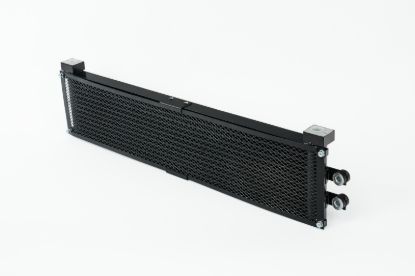
CSF 8220 - BMW F8X Oil Cooler
csf8220
CSF BMW F8X M3/M4/M2C Engine Oil Cooler w/ Rock Guard
$4,516.45 excl. VAT
Does your oil temperature rise significantly on track days, during long climbs or after adding more boost? An engine oil cooler routes the engine oil through an additional cooler so the temperature can be kept more stable. We offer both vehicle-specific solutions and universal coolers for your own project.
Engine oil lubricates and at the same time carries heat away from components such as bearings and pistons. Under high load, the oil can get so hot that it thins out and its lubricating ability drops. The cooler can be air-cooled and mounted in the airflow, or it can be a water-to-oil type, where the coolant absorbs the heat – e.g. the Cusco cooler for the Subaru BRZ and Toyota 86. Coolers for other fluids can be found under oil and fluid coolers.
Check via the part number that the cooler fits your specific car and engine variant. After installation, the oil level must be checked again, because the cooler and hoses hold extra oil. Regularly inspect hoses and connections for leaks, and keep the cooler free of dirt and insects.
An air-cooled cooler releases heat into the airflow and can typically cool the most at high speed. A water-to-oil cooler uses the engine's cooling system and can both cool the oil and help it warm up faster.
It depends on the cooler and how it is used. Some kits have a built-in thermostat, others do not – check the description for the specific part number. Without a thermostat, the oil can take a long time to reach operating temperature in cold weather.
It depends on the product and the car. Check for the specific part number which documentation is included, and clarify with the inspection authority if in doubt, especially if the installation changes the car's front end or bumper.


