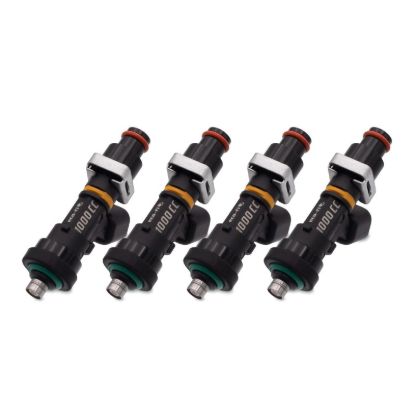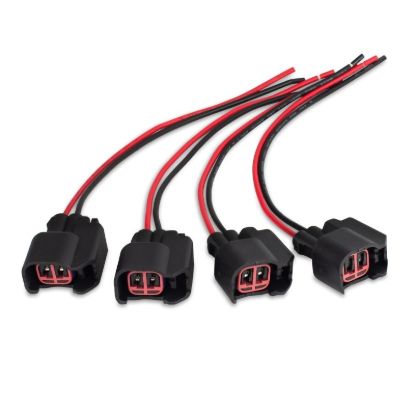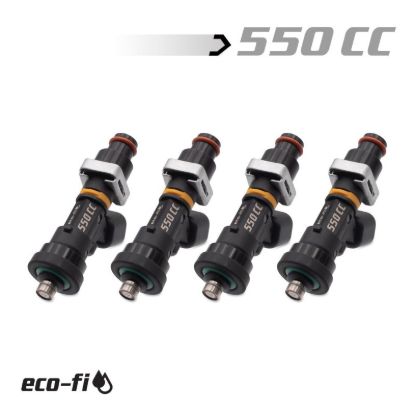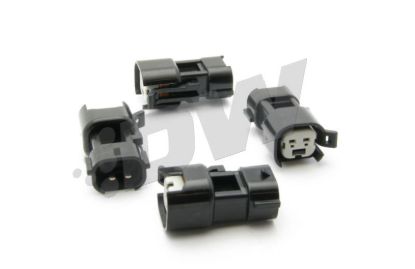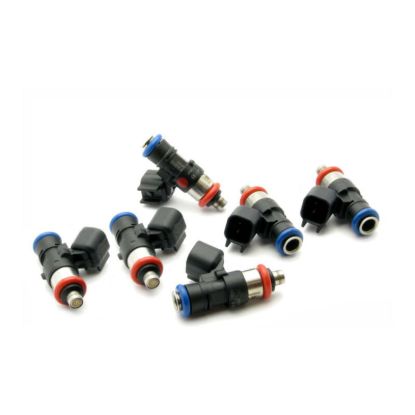


BLOX Racing Eco-Fi Street Injectors 1000cc/min w/ 1/2in Adapter For Honda K Series - Set of 4
bloBXEF-04914.14-1000-4
BLOX Racing Eco-Fi Street Injectors 1000cc/min w/ 1/2in Adapter For Honda K Series - Set of 4
$1,830.20 excl. VAT
Are your stock injectors no longer enough after you have raised the boost pressure or switched to E85? In this category you will find higher-flow fuel injectors for petrol engines as well as diesel injectors for your project, so the engine can get the amount of fuel your power target requires.
The most important criterion is flow, which is stated in cc/min, e.g. 550, 1050 or 1600 cc. The right flow depends on power target, number of cylinders, fuel type and fuel pressure. Injectors that are too small can result in a mixture that is too lean, while very large injectors can make idle and cold starts harder to calibrate. Also check:
Brands in this category include Injector Dynamics, Grams Performance, DeatschWerks and Exergy. For diesel engines we also have a separate category with diesel injectors.
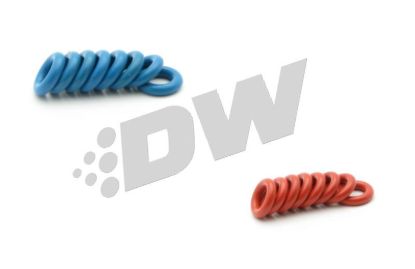
Larger injectors typically require the engine management to be calibrated with the correct injector data, otherwise the air-fuel ratio can be wrong. Use new O-rings and seals for every installation – see fuel injector seals – and lubricate them lightly so they are not damaged when the injector is pressed into place. Check for leaks before starting the engine, and make sure the fuel pump can deliver the required amount at the desired pressure.
It depends on power target, number of cylinders, fuel type and fuel pressure. E85 typically requires significantly more flow than petrol. Calculate your requirement with a margin so the injectors do not have to run at full duty cycle.
Typically yes. The engine management needs to know the injectors' flow and response data to meter fuel correctly. Without calibration, the mixture can become too rich or too lean, which can cause poor running and in the worst case engine damage.
Typical signs are a rough idle, misfiring on one cylinder, increased fuel consumption or a smell of fuel. The cause can also lie elsewhere, e.g. in the ignition, so have the fault diagnosed before you replace the injectors.