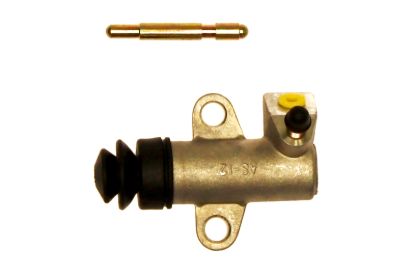

Exedy OE 1972-1972 Nissan 240Z L6 Slave Cylinder
exeSC559
Exedy OE 1972-1972 Nissan 240Z L6 Slave Cylinder
$135.71 excl. VAT
Is your clutch pedal sinking to the floor, or are gears hard to engage because the clutch doesn't fully release? The slave cylinder converts the hydraulic pressure from the pedal into the movement that releases the clutch. This category contains OE-style slave cylinders for specific car models and model years – for you who are repairing or renewing the clutch system.
The slave cylinder receives hydraulic pressure from the clutch master cylinder and converts it into a piston stroke. Depending on the car, the piston moves a release fork, or the cylinder sits concentrically around the input shaft and pushes directly on the release bearing, so the pressure plate releases the clutch disc. Leakage at the seal, a sinking pedal or a shifting engagement point can be caused by a worn slave cylinder – but the cause can also lie elsewhere in the clutch hydraulics.
Choose based on car model, model year and engine, as the same model can require different parts. At Exedy, the OE slave cylinders for e.g. the Mazda RX-7 are split into several model-year ranges. Also pay attention to:
The category also includes parts from OMIX.
After replacement, the system must be bled thoroughly, as air in the hydraulics typically results in a soft pedal and a clutch that doesn't fully release. Use the fluid type specified by the car manufacturer. If the clutch has to come apart anyway, it can pay off to look at a complete clutch kit at the same time – especially on cars with a concentric slave cylinder, where the gearbox typically has to come off to gain access.
Typical signs are fluid on the cylinder or around the bell housing, a pedal that feels soft or slowly sinks, and gears that are hard to engage. Also check the fluid level and the master cylinder, as the symptoms can be similar.
It is not a requirement, but on older cars it can make sense, because both parts are the same age and exposed to the same fluid. Replace porous hoses at the same time, and bleed the entire system afterwards.
An externally mounted slave cylinder can often be replaced with ordinary tools, followed by bleeding. If it sits concentrically inside the bell housing, the gearbox typically has to come off, and the job becomes bigger. Follow the car's workshop manual.