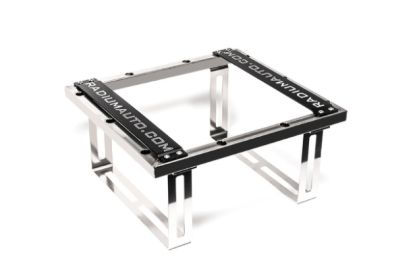

Fuel Cell Mounting Kits
How do you keep a fuel cell securely in place when the car accelerates, brakes and corners hard? A weld-in cage secures the cell to the car's body or chassis and can protect it against impacts. These parts are for you if you are fitting a fuel cell in your project.
What does a weld-in cage for the fuel cell do?
A mounting kit such as the Radium Engineering Fuel Cell Weld-In Cage is a cage that is welded into the car so the cell sits in a fixed frame. The cage must hold the cell in place under load and can provide extra protection if the tank takes an impact. The fuel cell itself, fuel caps and filler necks and sending units can each be found in their own category.
How to choose the right mounting kit
- Volume and dimensions: the cage must match the size of the cell – Radium Engineering, for example, offers versions for 6, 10 and 14 gallons. Check the external dimensions of both cage and cell.
- Space: measure where the cage will sit, including room for hoses, venting and possibly a surge tank.
- Installation: the cage is welded in place, so the job requires experience, and its position in the body should be assessed by a professional.
Whether the installation can be approved for road use or a specific racing regulation depends on the product and the car. Check the requirements for the specific part number.
Frequently asked questions
Does the cage need to be the same gallon size as the fuel cell?
Typically yes – the cage must match the cell's volume and external dimensions. Compare the dimensions of the specific cell and the specific cage before you order, as dimensions can vary between manufacturers.
Can I install a weld-in cage for the fuel cell myself?
It requires welding equipment and experience working on the car body. Since this concerns the fuel system, we recommend that a professional welds or at least inspects the mounting and positioning.
Can the car pass inspection with a fuel cell mounted in a weld-in cage?
That depends on the product, the car and the installation itself. Check the requirements for the specific part number and your car, and clarify it with the inspection authority or your racing regulations before you start.