
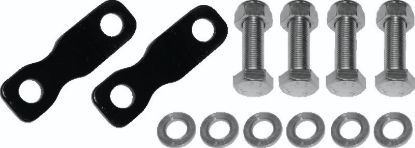
DragonFire Racing 16-Up Yamaha YXZ1000R Harness Mount
dfr521247
DragonFire Racing 16-Up Yamaha YXZ1000R Harness Mount
$345.14 excl. VAT
Where do you attach the shoulder straps when the vehicle has no usable point behind the seat? Harness mounts give your racing harnesses a fixed anchor point. You can choose a universal bolt-in mount or a bracket made for a specific model.
A harness mount is the point where the harness straps are anchored to the vehicle's frame or tube structure. Position and angle can affect how the load is distributed across the body in a collision. That is why the mount must suit both your racing harnesses and the vehicle. See also the rest of our seat belts and harnesses.
We carry mounts from DragonFire Racing. Whether the installation is permitted and approved at inspection depends on the product and vehicle. Therefore, check this for the specific part number.
That depends on whether the vehicle has a suitable and sufficiently strong mounting point at the right angle. A model-specific mount is made for a particular model. With a universal mount, you have to assess the position and mounting surface yourself.
That depends on the product and vehicle. Check the requirements and any approval for the specific part number, and feel free to ask your vehicle inspection centre before installing harnesses and mounts in a vehicle that will be driven on the road.
Inspect mounts and bolts regularly and always after an accident or hard driving. Check for cracks, deformation and loose bolts. Replace the mount if it has been exposed to heavy loads.
