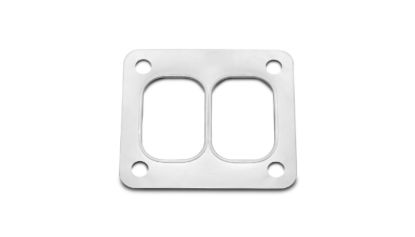

GrimmSpeed 02-10+ WRX/STi/LGT 7-Layer Uppipe-to-Turbo Gasket
grmGRM024001
GrimmSpeed 02-10+ WRX/STi/LGT 7-Layer Uppipe-to-Turbo Gasket
$169.52 excl. VAT
Is exhaust gas leaking between the exhaust manifold and the turbo, or are you fitting a new turbo? Turbo gaskets seal the joint at the turbo's inlet flange so the exhaust gas is routed to the turbine without leaks. We stock gaskets for both universal turbo flanges and specific car models.
A turbo gasket sits between the turbo's inlet flange and the exhaust manifold or uppipe and has to stay sealed through large temperature swings. A leaking joint can typically cause a ticking noise, an exhaust smell in the engine bay and slower boost build-up, because some of the gas bypasses the turbine. You can find gaskets for the other joints under exhaust manifold gaskets and exhaust flange gaskets.
The gasket must match the flange exactly. In particular, check:
From GReddy there is, for example, an inlet gasket for TD07, T78 and T88, and the category also includes brands such as Cometic Gasket and Wehrli.
A gasket can compress on the first tightening, so we typically recommend a new one every time the turbo has been removed. Clean old gasket residue off the flange surfaces, check them for warping and tighten the bolts evenly according to the manufacturer's instructions. If you switch to a different turbo type in your project, the gasket must fit the new flange.
It is typically not recommended. A gasket can compress and conform to the flanges on the first tightening, so it will not necessarily seal again after removal. A new gasket is a small part of the work on the turbo.
Look at the turbo's inlet flange: if a dividing wall splits the opening into two channels, the inlet is divided, and the gasket must have the same division. Otherwise gas can leak between the channels and the joint will not seal properly.
Typical signs are a ticking noise that can be most noticeable with a cold engine, soot around the joint and an exhaust smell in the engine bay. Boost can also build up more slowly. Other exhaust leaks can cause similar symptoms.