
Check & Shutoff Valves
Does fluid run back in the line when the pump is off, or do you want to be able to close off a hose without taking fittings apart? This category brings together check valves, shutoff valves, drain valves and pressure relief valves for you who build or repair fuel, oil and fluid systems in your project.
What do the different valves do?
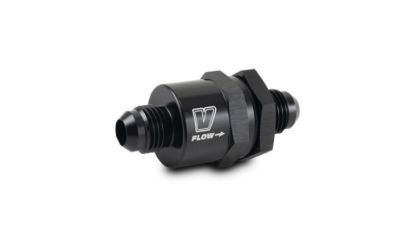
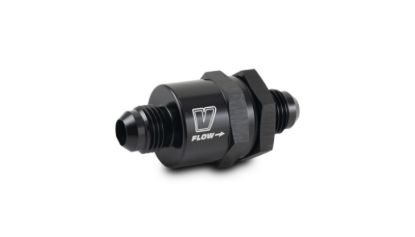
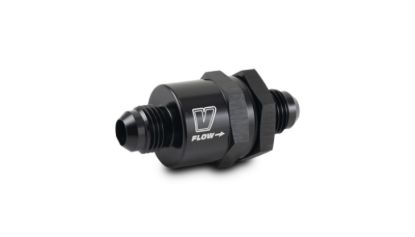
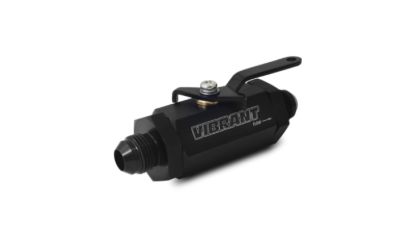
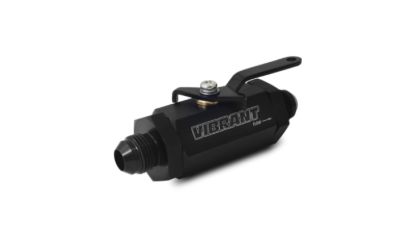
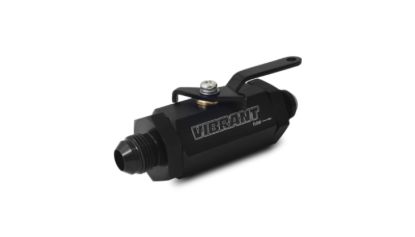
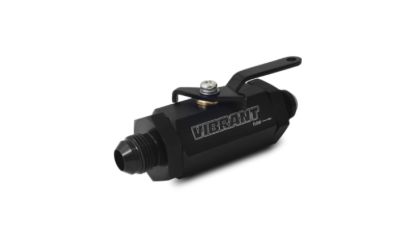
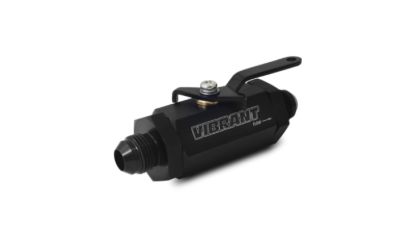
A check valve only lets fluid or air pass in one direction and can prevent backflow, e.g. so a line does not drain when the pump stops. A shutoff valve closes the flow manually, which can make servicing easier. Drain valves are typically screwed into a threaded port so you can empty a reservoir without removing it, while a pressure relief valve opens when the pressure exceeds a certain level. Spare parts for an existing fuel tap can be found under fuel petcock rebuild kits.
How to choose a valve
Several factors need to match:
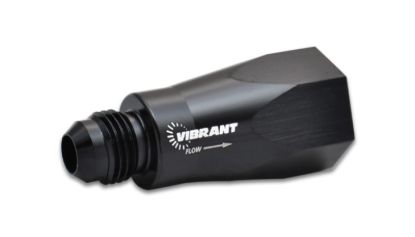
- Connection: AN size (e.g. -4AN, -6AN, -8AN or -10AN), ORB or NPT thread, or a hose barb as on the Vibrant 5/8in Barbed Check Valve.
- Female or male end: inline models with a female and a male end sit directly in the line, while models with male ends on both sides require suitable hose ends.
- Flow capacity: a valve smaller than the line can cause a pressure drop.
- Fluid and seals: check that the materials are compatible with the fluid you use.
- Cracking pressure: on check and pressure relief valves, function depends on the pressure at which they open.
Installation and maintenance
Check the flow direction, which is typically marked on the valve body, before installing. You will find matching parts under fittings and plugs and hose, line and tubing, and complete solutions under fuel system plumbing kits. Inspect the valves for leaks at regular intervals; a check valve that sticks or leaks back can cause pressure loss. The category includes, for example, valves from Vibrant and QuadBoss.
Frequently asked questions
What is the difference between a check valve and a shutoff valve?
A check valve works automatically and only lets flow pass in one direction. A shutoff valve is operated by you and can close the flow completely, e.g. when you need to change a filter.
How do I orient a check valve correctly?
The flow direction is typically marked with an arrow on the valve body, and the arrow must point in the direction the fluid should flow. If the valve is installed backwards, it blocks the flow.
Which AN size should I choose?
Choose the same AN size as the line and fittings the valve will be mounted on. A smaller valve in a larger line can cause a pressure drop, so check the dimensions in your system first.
Can a drain valve replace a regular drain plug?
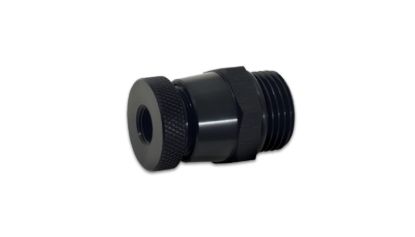
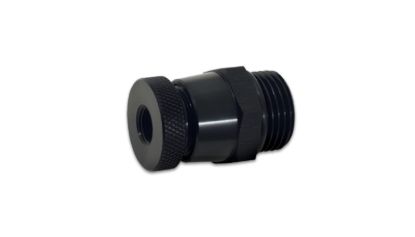
It depends on the thread and the available space. The drain valves here have, for example, ORB thread on one end and 1/8 NPT on the other, so the thread must match the port and there must be room around the valve.



QuadBoss 08-14 Honda TRX450ER Fuel Tap Kit
qbs420552
QuadBoss 08-14 Honda TRX450ER Fuel Tap Kit
$221.14 excl. VAT

QuadBoss 98-00 Suzuki LT-F500F QuadRunner 4x4 Fuel Tap Kit
qbs420571
QuadBoss 98-00 Suzuki LT-F500F QuadRunner 4x4 Fuel Tap Kit
$249.80 excl. VAT
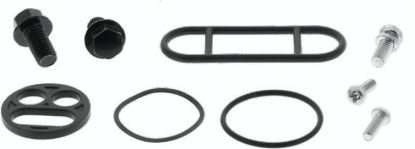
QuadBoss Arctic Cat 250/300/400/500/Bearcat 454 Fuel Tap Kit
qbs420535
QuadBoss Arctic Cat 250/300/400/500/Bearcat 454 Fuel Tap Kit
$144.75 excl. VAT

QuadBoss Honda ATC250ES Big Red/ATC250SX/TRX250/300/300FW Fuel Tap Kit
qbs420542
QuadBoss Honda ATC250ES Big Red/ATC250SX/TRX250/300/300FW Fuel Tap Kit
$162.22 excl. VAT
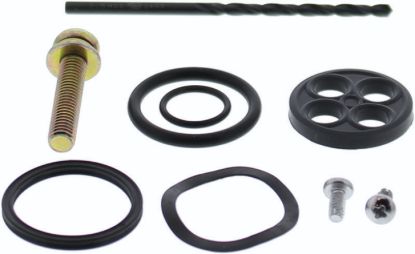
QuadBoss Honda TRX300EX/TRX300X Fuel Tap Kit
qbs420548
QuadBoss Honda TRX300EX/TRX300X Fuel Tap Kit
$170.53 excl. VAT

QuadBoss Honda TRX400EX/TRX400X Fuel Tap Kit
qbs420549
QuadBoss Honda TRX400EX/TRX400X Fuel Tap Kit
$178.16 excl. VAT
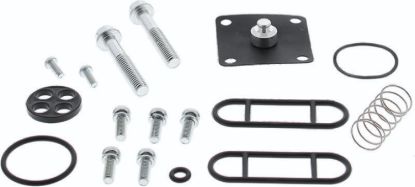
QuadBoss Suzuki LT-F250 Ozark/LT-Z250 QuadSport Fuel Tap Kit
qbs420565
QuadBoss Suzuki LT-F250 Ozark/LT-Z250 QuadSport Fuel Tap Kit
$432.51 excl. VAT

QuadBoss Yamaha YFM450 Grizzly/YFZ450 Fuel Tap Kit
qbs420578
QuadBoss Yamaha YFM450 Grizzly/YFZ450 Fuel Tap Kit
$180.37 excl. VAT