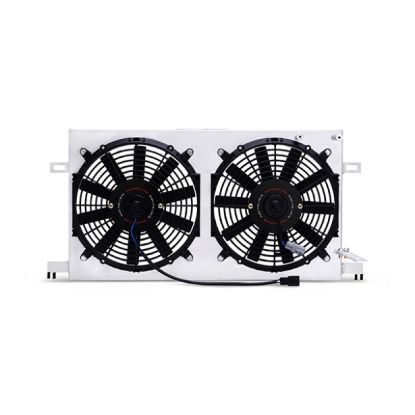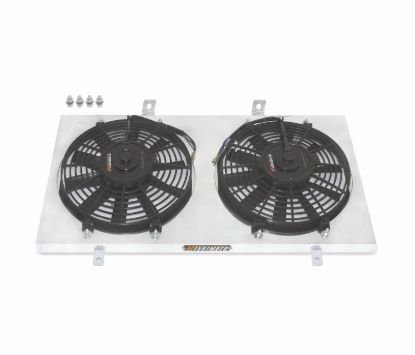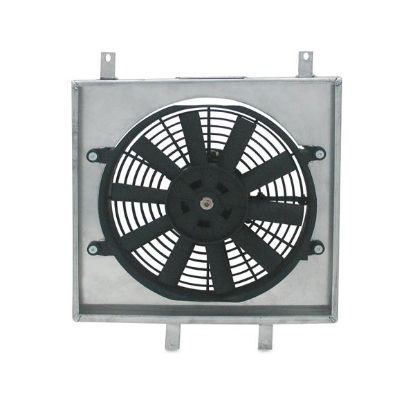

CSF 2858F - 92-00 Civic Fan Kit
csf2858F
CSF 92-00 Honda Civic All-Aluminum Fan Shroud w/12in SPAL Fan
$2,389.79 excl. VAT
Does your coolant temperature rise in traffic or at low speeds, even though the radiator is fine? A fan shroud can direct the fan's airflow through a larger part of the radiator core. This category is for you if you want to improve cooling at low speeds or are fitting an electric fan in your project.
A fan shroud seals tightly between the fan and the radiator, so the fan can pull air through a larger part of the radiator core. Without a shroud, some of the air is typically drawn in around the edge of the fan instead. The effect depends on the car, but is most often noticeable in traffic and at low speeds, where there is no ram air to help. The shroud works together with the rest of the system, e.g. fan blades for mechanical fans and fan controllers, which determine when an electric fan switches on. You'll find all parts for airflow under cooling fans.
The shroud must fit both the radiator and the fan. Many products are made for specific models, e.g. Honda Civic, Nissan 350Z or Subaru BRZ/Toyota GT86, so check the part number against your car – and against your radiator if it has been replaced.
Typically not much. At high speed, most of the air comes from ram air. Overheating at high speed can be caused by, e.g., radiator capacity, the thermostat, air in the system or too little coolant, so troubleshoot that first.
It depends on the kit. Some come with a fan, while others are designed for a specific fan size and specific mounting points. Compare diameter, depth and mounting holes with the product data before you order.
Check that the fan blades cannot hit the shroud, that all brackets are secure, and that wiring is not resting against hot or moving parts. Also check that the fan switches on at the correct temperature, and retighten after the first few drives.