
AUTOFLEX COUPLINGS
vib60804
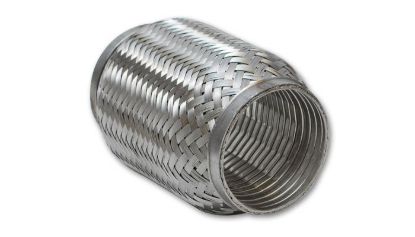
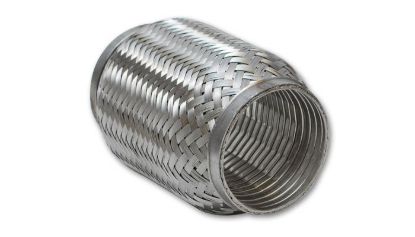
Vibrant SS Turbo FLEX Coupling with Interlock Liner 2.5in inlet/outlet x 4in long
$457.68 excl. VAT
Is your exhaust cracking at the joints, or does the system vibrate when the engine moves? A flex pipe absorbs engine movement and thermal expansion, so pipes, welds and hangers are put under less stress. This category is for you if you are building or repairing an exhaust and need a flexible joint in the piping.
The engine moves on its mounts, and the exhaust expands as it heats up. Without a flexible joint, these movements can over time cause cracks in welds, flanges or the exhaust manifold. That is why the flex pipe is typically fitted close to the engine, e.g. in connection with the downpipe, where movement is greatest.
The category also includes parts from Magnaflow.
The flex pipe is typically welded in or mounted with flanges. It must sit straight and without preload. If the piping needs to change direction, use exhaust bends instead, as bending and twisting can wear out the flex section faster. Protect the braided outer layer from weld spatter, and check the joints regularly for leaks.
Both sit inside the flex pipe and shield the bellows from heat and exhaust pulses. An interlock liner consists of interlocking metal segments, while a braided inner liner is a woven steel layer. The choice depends on location, temperature and how much movement the joint needs to absorb.
This is not recommended. A flex pipe is designed to absorb movement and thermal expansion, not to remain permanently bent or twisted. Constant preload can typically shorten its service life significantly. Instead, correct the piping with bends and install the flex pipe straight.
Typical causes are preload during installation, too short a flex length relative to engine movement, worn engine mounts or weld spatter on the braid. Rust and heat load can also play a part. So check the mounts and location when you replace a faulty flex pipe.