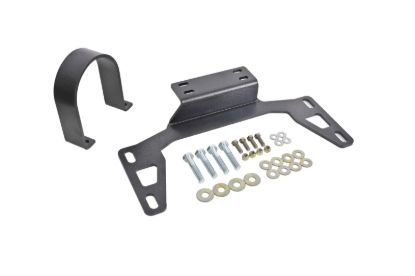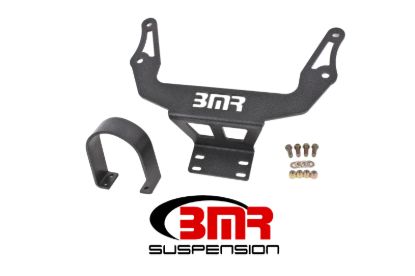

BMR 15-18 Dodge Challenger (Auto Trans) Hellcat/Demon Driveshaft Safety Loop - Red
bmrDSL111R
BMR 15-18 Dodge Challenger (Auto Trans) Hellcat/Demon Driveshaft Safety Loop - Red
$2,065.87 excl. VAT
A single broken U-joint under hard acceleration can send the driveshaft slamming into the tarmac or up into the underside of the car. A safety loop catches the loose end. It's for you if you have a high-power build, run drag races or want extra margin on track days.
The loop sits around the driveshaft and is typically mounted to the floor or a crossmember. If a U-joint, coupler or the shaft itself fails, the loop can hold the loose end so it doesn't dig into the road or damage fuel lines and brake lines. The need typically increases with power, traction and hard launches, and in drag racing it depends on the class rules whether a loop is required. You can see the full range under driveshaft safety loops.
Many loops can be bolted into existing holes, but it depends on the car and product, and some may require drilling. There must be clearance all the way around the shaft so it doesn't hit the loop during normal driving. Besides BMR, we carry brands such as UMI Performance and Moroso, and for the Subaru WRX and STI there is, for example, the Driveshaft Lockdown Kit from Perrin Performance. Regularly check bolts, brackets and the clearance to the shaft, especially after hard launches.
It depends on the class, power, times and tyres in the applicable rulebook. Check the organiser's rules before you race, and choose a loop that fits your specific car and position.
It depends on the product and car. Check for the specific part number which documentation is included, and consider asking the inspection centre before you fit the loop to a registered car.
Typically because the loop is mounted crooked or too close, or because the engine and gearbox move more than expected, e.g. due to worn mounts. Adjust so there is clearance all the way around, and check the mounts.