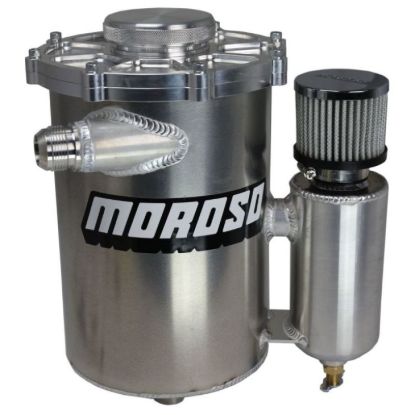

Moroso 2 Piece 6in Dia 20in Tall 8qt Dry Sump Tank - Black
mor22030
Moroso 2 Piece 6in Dia 20in Tall 8qt Dry Sump Tank - Black
$6,225.00 excl. VAT
How much oil does your dry sump system need to hold, and how should it be routed into the tank? In this category you will find dry sump tanks from Moroso for projects where the oil is stored outside the engine, so the oil supply can be kept stable under heavy G-forces.
In a dry sump system, one or more scavenge stages in the oil pump draw oil from a shallow oil pan and send it to a separate tank. From there, the pressure stage picks up the oil and feeds it back to the engine's lubrication points. The tank acts as a reservoir and typically gives the oil a chance to release air before it is drawn up again. Because the tank works together with the oil pump, the oil pan and the oil pickups, the parts should be chosen as a complete system.
The tanks from Moroso in this category differ in several ways, and the right choice depends on engine, pump and available space:
Position the tank so the hoses to the pump are as short and smooth as possible, and check that hose size and fittings match the rest of the system. How the oil level is measured depends on the system, so follow the instructions for your setup. Also remember filtration in the circuit with the right oil filters and filter adapters.
It depends on the engine's total oil capacity, the pump's capacity and the space in the engine bay. A larger tank can provide more reserve and time to release air, but it must be possible to mount it with short, smooth hose runs.
The number of inlets determines how many return hoses from the pump's scavenge stages can be connected directly to the tank. The choice depends on your pump and hose routing, so check the number of stages and the fitting size, e.g. 16AN, before you choose.
A breather tank can collect oil mist and oil from the tank's vent so it does not end up in the engine bay or on the track. Whether you need one depends on the system's ventilation and any requirements in your racing regulations.