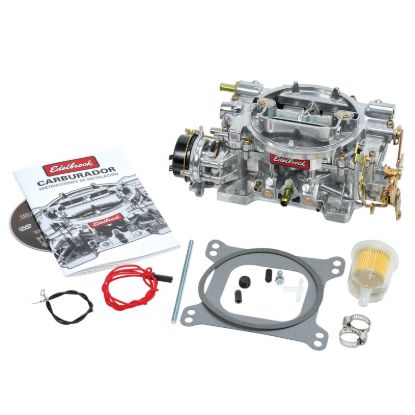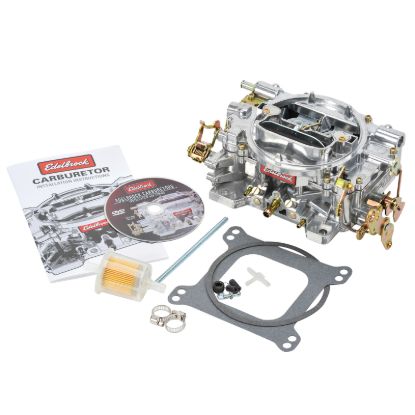
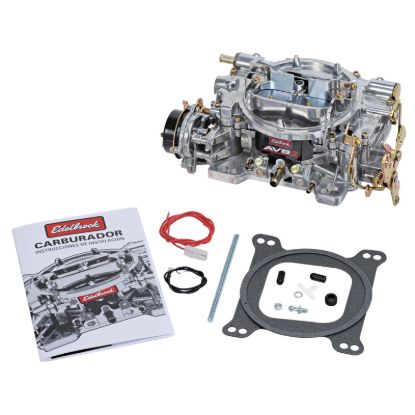
AVS2 800 CFM Carb w/Electric Choke #1913
ede1913
Edelbrock Carburetor Thunder Series 4-Barrel 800 CFM Electric Choke Calibration Satin Finish
$5,388.44 excl. VAT
How many CFM does your engine really need? This category brings together complete 4-barrel carburetors from 500 to 950 CFM, e.g. from Edelbrock, for you who want to replace a worn carburetor or match the fuel delivery to a new project.
CFM indicates how much air the carburetor can flow. The requirement depends on the engine's displacement, the rpm it needs to perform at and how efficiently it fills the cylinders. A carburetor that is too large can cause sluggish response and an imprecise mixture at low rpm, while one that is too small can limit power at high rpm. The models range, for example, from the Edelbrock AVS2 500 CFM through the Performer 600 CFM and Thunder AVS 650 CFM to the VRS-4150 at 950 CFM.
Check the flange pattern and space under the hood before you order. With carburetor spacers you can change the height and airflow toward the intake, and the throttle linkage must match your throttle cable setup. The mixture is typically fine-tuned with jets, and in case of wear a rebuild kit can restore function. Whether the replacement requires an inspection or approval depends on the car and the product, so check this for the specific part number.
An electric choke opens gradually by itself as it warms up and requires an ignition-switched power supply. You operate a manual choke yourself via a cable, which gives direct control, but you have to remember to turn it off.
It can be caused by incorrect idle and mixture adjustment, leaks at the flange or a carburetor size that doesn't suit the engine. Typically the idle, accelerator pump and jets need to be adjusted before the engine runs smoothly.
That depends on the car, its registration and the specific carburetor. Check for the individual part number whether an inspection or other approval is required before you fit it to a registered car.