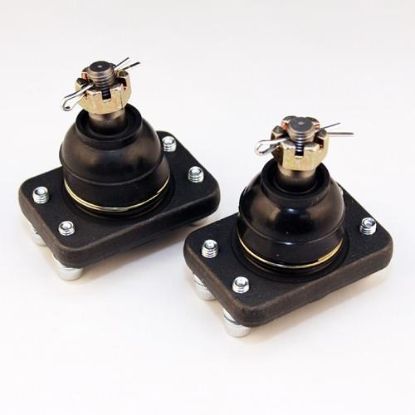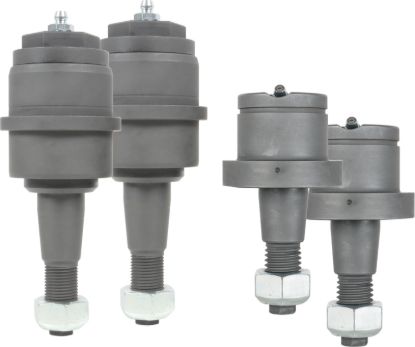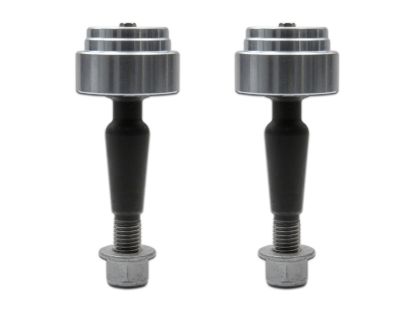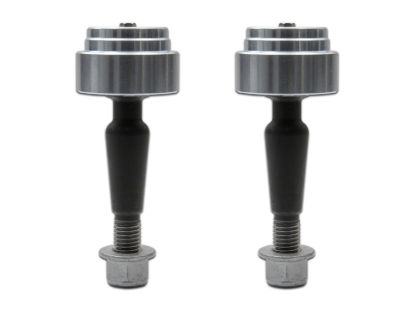
BLOX Racing Replacement Competition sliding ball joints
bloBXSS-20201-CBJ
BLOX Racing Replacement Competition sliding ball joints
$458.35 excl. VAT
Does the front wheel clunk over bumps, or does your lowering need to be followed up with joints that can handle greater angles? Ball joints connect the control arm and the steering knuckle. Here you can choose between standard ball joints, sliding joints and rod end joints for projects on the road, on track and off-road.
The ball joint connects the control arm to the steering knuckle. This lets the wheel turn when you steer while also moving up and down with the suspension. A worn joint develops play, which is typically felt as clunking over bumps, wandering steering or uneven tyre wear. In this category you will find standard ball joints, sliding versions and rod end ball joints, e.g. SPC Performance's xAxis series. There are also replacement ball joints for SPC arms.
Several dimensions need to match at the same time. Size alone does not determine whether the joint fits:
The category includes brands such as SPC Performance, QA1, Superpro, QuadBoss and EPI. Always compare the dimensions for the specific part number with your control arm.
Installation typically requires a press tool or ball joint separator and the correct tightening torque. Use a new lock nut or cotter pin if the manufacturer specifies it. Have the wheel alignment checked after the replacement. At the same time, check the tie rods and steering rack boots, as play or leaks there can cause similar symptoms. You will find other steering parts under steering.
Typical signs are clunking over bumps, play when the wheel is lifted off the ground and rocked vertically, wandering steering or uneven tyre wear. The symptoms can also be caused by tie rods or bushings, so check the entire front suspension.
A standard ball joint typically has a sealed housing with a boot. A rod end ball joint is based on a spherical bearing and can give a more direct steering feel. Depending on the product, it can also produce more noise and require more frequent inspection.
That depends on the product and the car. Ball joints are part of the steering and suspension, so check for the specific part number whether it may be used on the road and whether the modification must be registered or inspected.