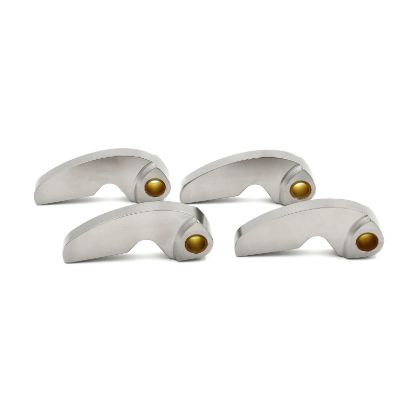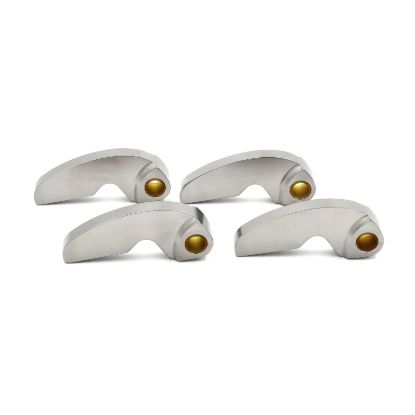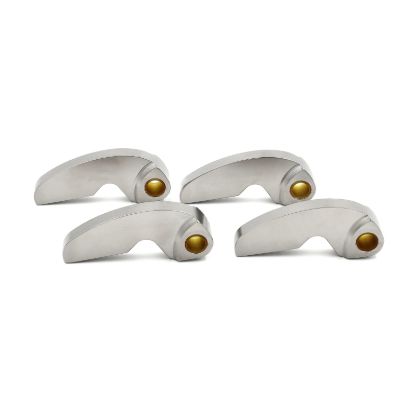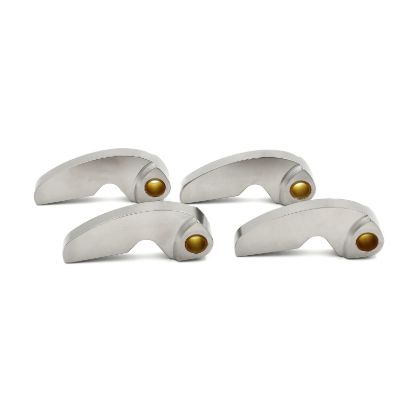

EPI 21-25 1000 Commander QRS-X Clutch Weights 48 gm - Pack of 3
epi36648S
EPI 21-25 1000 Commander QRS-X Clutch Weights 48 gm - Pack of 3
$1,235.94 excl. VAT
Does your clutch shift up too early, or are the revs wrong for your tyres and the way you ride? The weights in the primary clutch control when and how quickly the belt changes ratio. Here we have weights and pin kits from EPI for Polaris, Can-Am, Arctic Cat and Kawasaki, among others.
The weights sit in the primary clutch and swing outwards as engine speed rises. This squeezes the sheaves together so the belt rides higher, and the ratio changes. Heavier weights typically make the clutch shift up at lower revs, while lighter weights keep the engine higher in the rev range. The right choice depends on engine, tyre size, load, riding style and any engine modifications.
The weights pivot on pins, and wear here can cause uneven shifting. That is why we also stock pin kits from EPI for Can-Am and Polaris, among others. Typically replace the whole set so the weights are equally heavy, and check the belt and sheaves for wear at the same time. You will find more drivetrain parts under clutches and flywheels.
Weights that are too heavy can make the clutch shift up too early, so the engine works below its power band and feels sluggish, especially with large tyres or heavy loads. It can also increase the strain on the belt.
Small steps make it possible to fine-tune engine speed to tyres, load and riding. For example, the EPI Belly Buster weights for the Kawasaki 650 Brute Force are available in 52, 54, 56 and 58 grams.
It depends on the condition of the pins. If they are worn or uneven, the weights can stick or move unevenly, so a new pin kit is typically a good idea at the same time as the weights.