
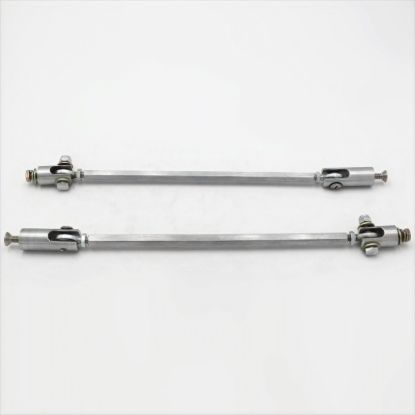
Aero Splitter Mount - M-16602-FP350S
frpM-16602-FP350S
Ford Racing FP350S Pencil Rod Kit
$4,722.47 excl. VAT
Looking for more control over the air under the front end or a lower, sharper look? A front splitter is mounted under the bumper and can, depending on its design, reduce lift at high speed. This category includes splitters, aero kits and brackets for street cars and trackday projects.
A splitter is a flat plate that protrudes forward beneath the bumper. It can create higher pressure above the plate and lower pressure below it, so the front end typically experiences less lift. The effect depends on height, protrusion and the rest of the aerodynamics – a strong front end should often be balanced with a wing at the rear of the car or a rear diffuser.
Start with the car model and year, as splitters are typically designed for a specific bumper – e.g. Ford Racing kits for the Ford Mustang GT500, Mustang GT or Performance Pack. Then choose material and finish, e.g. carbon in gloss or matte. Consider ground clearance: a large protrusion can hit curbs and ramps. Some solutions, such as a wide body front from GReddy or a 3-piece aero kit from Roush, are designed as a complete front that can be complemented with side skirts.
Check whether brackets or support rods are included or must be purchased separately. Retighten the mounting regularly, especially after a trackday. Whether the part may be used on public roads depends on the product and car; check this for the specific part number.
It depends on the product and car. Protrusion, sharp edges and ground clearance can matter at vehicle inspection, so check the rules and any approval for the specific part number.
It depends on the model. Some splitters are supplied as complete kits, while brackets and support rods for others are purchased separately. Check the product description before you order.
Drive up over curbs and ramps at an angle, and choose a protrusion that suits the car's ride height and use. A lower car typically requires more caution.