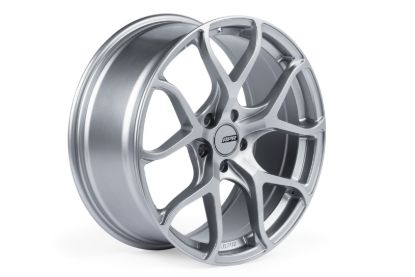

APR A02 FF 19X85 ET45 SILVER
aprWHL00024
APR A02 Flow Formed - 19x8.5 - 5x112 - ET45 - 66.5mm Center Bore - Hyper Silver Wheel
$4,368.49 excl. VAT
What actually sets a flow-formed wheel apart from a regular cast one? The wheel is cast first, after which the barrel is rolled out under pressure and heat, typically making the material denser. In this category, we bring together flow-formed alloy wheels for you if you want strong, lightweight wheels for street or track driving.
With flow-forming, the centre of the wheel is cast, while the barrel is then rolled out over a mandrel under pressure and heat. The process can produce a denser and stronger material in the barrel, so weight can typically be saved compared to an equivalent cast alloy wheel. However, the actual weight depends on design, diameter and width. If you want to compare with other types, you can browse all our alloy wheels.
Start with the dimensions your car requires, then choose design and colour:
From Konig you will find, for example, Heliogram, Hypergram, Diverge and Hexaform, while APR is represented with A01 and A02 in several colours.
Whether a wheel and tyre combination can be approved depends on the wheel, the tyre and the car, e.g. track width, wheel coverage and load rating, and it must be checked for the specific part number. Clean the wheels with a pH-neutral wheel cleaner, and re-torque the wheel bolts to the correct torque after the first few kilometres.
Both start out as cast, but on a flow-formed wheel the barrel is then rolled out under pressure and heat. This can produce a denser material and typically lower weight, but the difference depends on design and size.
That depends on whether the wheel's centre bore matches your car's hub. If the centre bore is larger than the hub, hub-centric rings are typically used so the wheel is centred correctly and the risk of vibrations is reduced. Check both the centre bore and the hub before ordering.
That depends on the wheel, tyre and car. A changed offset or width can affect track width and wheel coverage, so check approval and load rating for the specific part number, and feel free to ask the inspection centre in advance.